Recycling and Sustainability — Flat Clearance Merton
 Flat Clearance Merton is committed to creating an eco-friendly waste disposal area across every job we undertake. Our approach to flat clearance in Merton blends practical removal work with measurable environmental outcomes: we prioritise reuse, maximising recycling and cutting carbon emissions from collection and transfer. As a local Merton flat clearance team we recognise that sustainable rubbish area management is as much about people and processes as it is about vehicles and sorting facilities.
We have set a clear recycling percentage target to guide our operational decisions: an immediate 65% recycling rate for all cleared materials within the next 24 months, rising to a company long-term ambition of 75–80% by 2030. These targets cover diverted items such as furniture, large appliances, textiles, mixed recyclables and construction-type waste from small renovation clearances. Reaching these targets will require continued investment in sorting, partnerships, and delivery to appropriate local transfer stations and material recovery facilities.
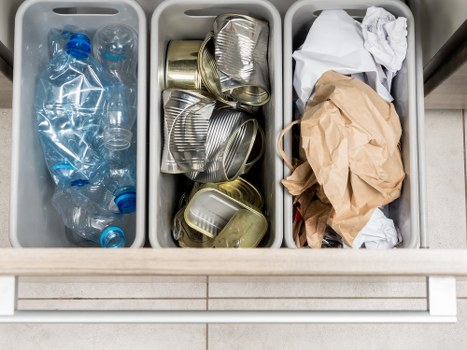 Working with the borough’s approach to waste separation, we align with Merton’s local expectations for source-separation where possible. The borough encourages the separation of food waste, garden waste, dry recyclables (paper, card, glass, cans and some plastics) and a residual stream for non-recyclables. On-site sorting during a flat clearance in Merton allows us to segregate items to mirror council collections and local recycling infrastructure, improving capture rates and lowering contamination.
We have developed formal partnerships with local charities and social enterprises to ensure reusable items find new homes rather than ending up in the residual waste stream. These collaborations include furniture re-use charities, community arts projects that repurpose materials, and homelessness support services that accept good-condition household items. Partnerships with charities are central to our circular approach: every day we coordinate collections and donations that support local people and reduce the volume requiring disposal.
To move materials efficiently and responsibly we use designated local transfer stations and authorised facilities in and around south-west London. Our logistics plan identifies nearby municipal depots and private transfer stations and directs separated streams — e.g., metals to metal recycling centres, WEEE and appliances to specialist treatment centres, and bulky items destined for furniture re-use warehouses. These transfer hubs and material recovery facilities (MRFs) are essential for maintaining a robust, traceable chain from your property to the sustainable rubbish area destinations.
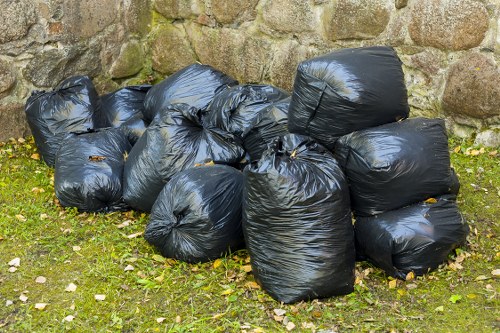 Our operational process for each clearance includes a pre-sort phase, manual segregation, and digital logging of routed materials. We record volumes destined for recycling, donation, recovery and disposal, providing transparency against our recycling percentage target. During bulky-item clearances we divert: electrical goods for safe WEEE recycling, mattresses to accredited processors, timber and inert materials for reuse or processing, and soft furnishings where possible to reconditioning partners.
Low-carbon vans are a critical part of our sustainability performance. Our fleet now includes electric vans for short urban runs, low-emission hybrid vehicles for mixed routes and modern Euro 6 vehicles for heavier loads. Coupled with route optimisation software and consolidated scheduling, these measures reduce fuel usage and emissions across the flat clearance services Merton-wide. We also trial cargo bikes and micro-vehicles in dense areas to keep our carbon footprint low in the most congested streets.
Our emphasis on creating a recognised sustainable rubbish area extends beyond vehicles. We train crews in correct segregation, identify salvageable items on arrival, and provide regular refresher sessions on waste hierarchy principles (reuse, recycle, recover, landfill as last resort). Transparent reporting and audits against our recycling percentage target help us monitor progress and adapt where capture rates fall short.
Key elements of our sustainability programme include:
- Measured recycling targets with quarterly reviews and public reporting of aggregated performance;
- Partnerships with charities and local re-use networks to redeploy furniture and household goods;
- Use of authorised transfer stations and material recovery facilities to ensure proper processing;
- Low-carbon van fleet and route optimisation to reduce emissions from collections;
- Workforce training that embeds the borough approach to waste separation into everyday practice.
 Community engagement is part of what makes our efforts effective: we liaise with Merton community groups, housing associations and estate managers to coordinate clearances that avoid duplication and improve reuse opportunities. When possible we schedule items for pick-up by charity partners or social enterprises, keeping materials circulating locally and supporting the borough’s sustainability goals.
We also work on site-specific solutions for sustainable rubbish area creation within blocks of flats and estates — from secure segregated collection points to signage that matches the borough’s guidance on food, garden, dry and residual streams. These small investments in infrastructure reduce contamination rates and improve the overall yield of recyclable material collected during a Merton flat clearance.
 In summary, our approach to flat clearance services Merton-wide is built on measurable targets, trusted transfer station relationships, charity partnerships, and a low-carbon fleet. By combining operational discipline with community-focused reuse activity, Flat Clearance Merton aims to deliver both efficient clearances and a meaningful contribution to local sustainability. We continually refine our processes so that each clearance supports a cleaner, greener borough and a resilient circular economy.